

When the federal government slashed international student permits last year, several post-secondary marketing programs quietly vanished. At the time, heads down building Canadian Ad Insider and PR In Canada, the news barely made a blip on our radar.
Even a wave of concerned LinkedIn posts from professors didn't initially set off alarm bells. But recently, the reality hit home, sparking a critical question: with these programs gone, is the Canadian advertising & marketing industry about to face a talent drought?

I see a lot of students think they are “job-ready” vs what the industry expects. The overarching problem we have is an employability gap, not necessarily a knowledge gap
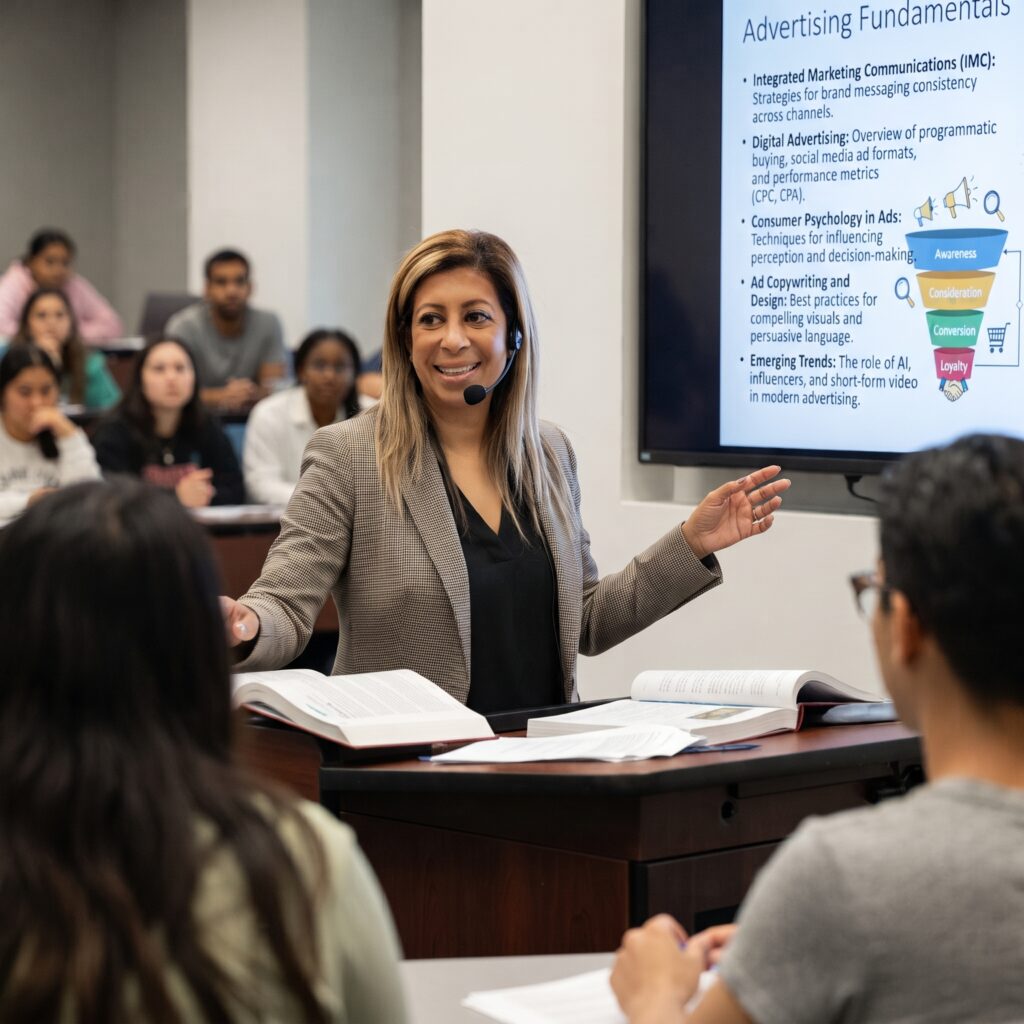
When I teach Intro to Marketing, I can have 60–70 students in a room. A lot of them don't know yet whether they want marketing, media, brand, social, research, sales, creative, strategy or something else. That's completely understandable at that age and with experience working in many spaces in the industry. But many do know one thing: “I want to graduate and get a job.”
The problem is that wanting a job and understanding how to become employable are two very different things.
They may know the fundamentals, and now, with AI, they can produce something that looks quite sophisticated incredibly quickly without really knowing it.
But put them into a setting, and it’s a different flex.
“Here's the client brief. Here's the budget. Figure out what matters, what you need to ask, where you'd start, and come back with a point of view, ideate .” That's a completely different capability.
What sets a student apart on Day One?
Sabrina - I wouldn't promise that my graduate walks in knowing every platform. Platforms change.
I'd want them to walk in knowing how to behave like a junior media/marketing professional.
In the first 3 months, if I give my student a brief, they should be able to (not saying there isn’t learning, always just the fundamentals of the industry to apply to the client/Business etc:
- Read it and distinguish the business problem from the communications problem.
- Identify what's missing and ask intelligent questions rather than immediately starting a PowerPoint.
- Translate an audience like “Gen Z grocery shoppers” into an "ABC" actual media audience and behavioural hypothesis.
- Look at a $1M budget and understand that allocating money is making a series of strategic choices, not filling cells in a spreadsheet.
- Understand basic reach, frequency, CPM, impressions, CTR, conversion and incrementality — and, more importantly, know which metric matters when.
- Open Excel without being intimidated by the data.
- Look at research and say, “That's interesting, but is it actually an insight?”
- Understand the basic roles of paid social, search, programmatic, OOH, TV/video, audio, retail media and influencers. This is a hard part because we are not teaching a 360 mix, mainly digital.
- Build a simple media recommendation and explain why the money should go there.
- Use AI to accelerate the work without outsourcing their judgment to it.
- Write an email to a client or vendor that someone wouldn't need to completely rewrite.
- Sit in a status meeting, take useful notes, understand the action items and know what they own afterward.
- Present, with work and coaching
- Say, “I don't know, but here's how I'd find out.”
What now has to be taught that used to arrive “pre-installed”?
Sabrina - Some of these things weren't actually pre-installed. The industry installed them. Junior people learned by doing junior work.
They built reports. They pulled competitive data. They updated flowcharts. They sat beside planners. They listened to client calls. They took notes. They made mistakes on relatively low-risk assignments. Someone senior corrected them. That was the apprenticeship model.AI and automation are consuming parts of that, which is fine, but not so early in the game.
So education has to deliberately teach some things students previously learned almost accidentally during their first 12–18 months at work.
Curiosity has to be taught and rewarded. Don't just answer the brief. Interrogate it.
Judgment has to be exercised. Give students imperfect information where there isn't one correct answer.
Commercial literacy has to be taught. What does the client sell? How do they make money? What is margin? Why does $500K versus $5M change the media answer?
Professional communication has to be practised. Emails, meetings, presenting, feedback, disagreement and managing upward.
Media math and data literacy have to become muscle memory. What is the so what of the numbers, not just a data dump. Go deeper.
AI literacy has to mean more than prompting. The graduate advantage won't be “I know ChatGPT.” AI fluency is rapidly becoming table stakes. The differentiator is knowing when the output is wrong, generic, strategically weak or unsupported. Students have to learn to form a point of view. AI can give you 20 observations; you still have to say, “This is the one that matters, this is why, and therefore this is what I think we should do.”
Takeaways:
- The Talent Pipeline is Shrinking—and Underprepared: The elimination of post-secondary marketing programs isn't just creating a volume problem for agencies and brands; it's exposing a massive "employability gap." Graduates might know the platforms, but they lack the commercial literacy and critical judgment expected on Day One.
- The Apprenticeship Model is Broken: AI and automation are rapidly absorbing the foundational, low-risk tasks (like reporting and updating flowcharts) that traditionally served as the training ground for junior talent. The built-in 12-to-18-month "accidental learning" phase is gone.
- Education and Industry Must Pivot: Post-secondary programs must deliberately teach the strategic judgment and professional communication that used to be picked up on the job. Simultaneously, agencies and brands must urgently rethink how they train entry-level talent to prevent a severe leadership drought.
Part 1 of our 2-part interview.
