



Welcome to “We Are Media Lovers,” where we engage with media buyers and planners from across Canada. In each episode, we explore their passion for all things media, discover how they were first introduced to the industry, and learn about the key insights from their journeys that made them fall in love with this field.
Learn. Connect. Grow.
Join a thriving community of media buyers and planners where you can sharpen your skills, access exclusive content, and connect with industry experts—all for free!
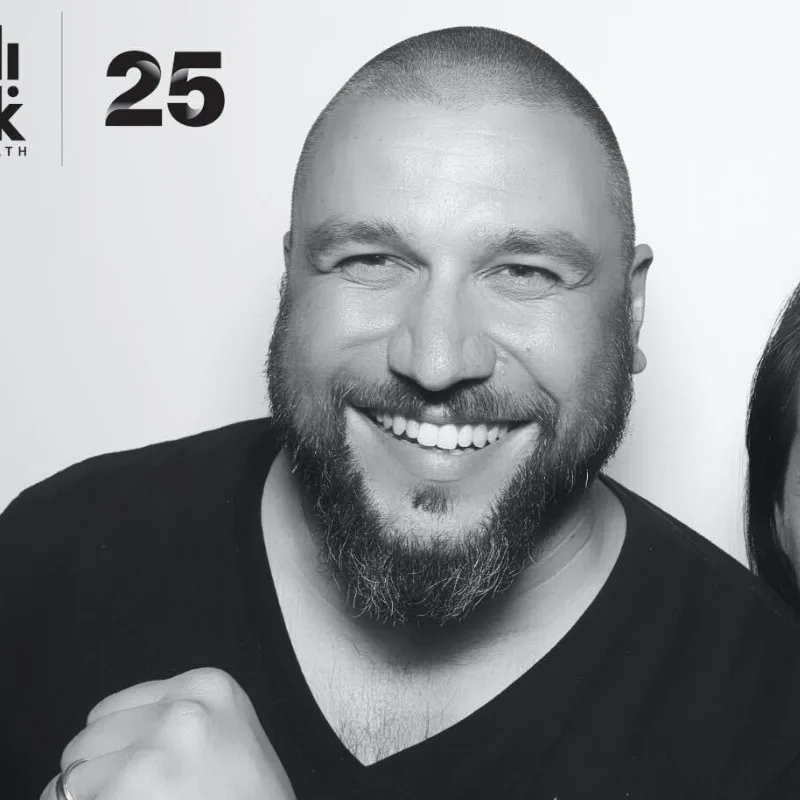
For this episode of We Are Media Lovers, we sit down with Sean Perkins – VP, Media Strategy & Planning at Klick.
What sparked your interest in the media buying industry?
Sean – I developed an interest in marketing as a whole on the heels of a summer job going door-to-door selling 3rd party gas contracts as a high-school student in the late 90s. That job structure was 100% commission-based, where I had to learn on the fly how to overcome my fear of public speaking, present, gain and hold a client’s attention while reacting on the fly, and ultimately address objection handling in a respectful way that would produce the outcome I was after. I start at this point in the journey, as before that job, I was gearing up to follow in my parents’ footsteps as Math / Computer-Science Engineers, where I promptly switched all of my majors that following year to concentrate on business instead. Progressing from here, I followed my intuition through post-secondary college and then university, landing a job in a related field working at a Sales company selling media solutions to marketers the week after I wrote my last exam. The rest is history, relatively speaking, although it is tough to get my head around the fact that it was also nearly 20 years ago now.
Has there been a campaign that significantly impacted your approach to media buying?
Sean – One that takes the cake for me was in 2011 when working on the Mercedes-Benz & Visa accounts, focusing on Mercedes specifically, ahead of their 2012 C-Class rebranding efforts, in looking at ways to disrupt the market that stayed true to the Brand values of ‘The Best or Nothing’, we also had to find a way to break through dated perceptions of the Brand and bring it to be something aspirational again in a luxury category.
Parallel pathing our discovery phase for Visa’s support of the Toronto International Film Festival (TIFF) that year, we uncovered numerous opportunities to own media real estate that would promote their standing as an official Sponsor. These opportunities included Celebrity entrances, editorial features and the like, all of whom aimed at building up excitement around films being debuted that year. Given Mercedes’ goals of associating with that type of modern Hollywood celebrity / Luxury environment, it felt like a natural fit to try and find ‘like’ opportunities for them to announce their new C-Class rebrand, but unfortunately were category blocked by Cadillac, who owned the automotive sponsorship rights at the time.
The thing about TIFF at the time, is that organically, it didn’t live on media publisher properties as a standalone channel or section, but rather was nested as a sub-component of more common headers that lived year round, such as arts, entertainment, news and lifestyle. Getting creative with our publisher sales reps, we inquired about the costs of a complete buyout of an August and September ‘takeover’ of ‘Arts’, ‘Entertainment’, ‘News’ and ‘Lifestyle’ content verticals (vs. TIFF sponsorships), inclusive of every available ad position. We took those estimates to Visa to ask about whether they would like to ‘own’ 50% Share of voice with another non-compete advertiser in support of their TIFF efforts pre, during, and post, to which they agreed. We then went to Mercedes with the same offer, to which they were surprised the opportunity was even on the table, promptly agreeing as well to pick up the other half of the tab.
This left us with a great opportunity to support two clients on a single initiative, but also created a dilemma around how we could go to contract, knowing Cadillac would eventually connect with many of these same partners to promote their TIFF presence. To close the loop, we requested our sales reps review the merit of our proposed August and September content vertical takeovers with their in-house legal teams, which led to a condition of contracting that the media buy would not be pulled or shorted (see content carve-outs) under any circumstance. The big win here for Mercedes is that they had a platform of dialled-in viewers where the Mercedes campaign creative took the rest of the way home. Within a year of that (and a few other keystone campaign efforts that year), Mercedes regained the top spot as the leading Luxury Automotive company from a Sales perspective in Canada, riding that momentum for many years to follow.
My lesson learned – The Devil’s in the Details, and there’s no substitute for building strong partnership relationships with your sales reps!!
How has the media landscape evolved during your time in the industry?
Sean – The emergence of Audience-based buying on a 1:1 level, where the role of Title partnerships has changed significantly. It’s levelled the playing field in some ways while simultaneously making it harder to stand out as the tools and technology are largely available to everyone equally, making the differentiators sit in how the science is done behind the scenes.
In terms of how this shapes my strategies today, I have migrated to a more centric view that Content and Audience media buying approaches each have their role to play, however hold firm to the believe that Media will always be a ‘people-based’ business as it pertains to the relationships formed in executing solid campaigns.
What are the most pressing challenges facing media buyers today?
Sean – I think the emergence of A.I., the prevalence of programmatic, and the pace at which our industry is advancing are all in their own ways creating unique challenges for Media Buyers today. Having worked at a number of different agencies and publishers over my career, it is common to encounter competing pressures that all have their tradeoffs. If you work in a tech-centric organization, there will be an inherent need to continue to demonstrate your value and thought-leadership high-ground relative to your competition. If you work at a publisher, there will inherently be a challenge posed to you about the external business value that’s created for Advertisers on the heels of any internal production costs to justify starting down that road. If you work at a smaller shop, you will likely run into the inherent need to be an expert in multiple things simultaneously, as there just isn’t the available capital to have dedicated experts on staff to fill that role.
How do you balance the need for data-driven insights with the importance of creative storytelling in media planning?
Sean – All of that is to say, having a high degree of self-awareness about your strengths relative to your peers and factoring in your work environment to know when to tag in someone else for support is a hard lesson to learn, and something I continually re-discover about myself in terms of my limitations every day. This industry’s constant is change, which happens at a pace that can be challenging to keep up with. Furthermore, in factoring in people dynamics, appreciating there is no one patent on ‘right’, it becomes imperative to approach every challenge with fresh eyes and an open mind, leaning on the ‘best available data’ for that challenge and then bridging with human experience and rounded out perspectives to produce the best outcomes for our clients.
How do you measure the success of a media campaign?
Sean – Measuring campaign successes in Media is something that has evolved for me quite a bit in my career. At present, I would say the overarching challenge is in identifying Quantitative measures that best represent desired Business outcomes, vs. vanity metrics that have been tossed around in the media since it became heavily digitally focused in the early 2000s.
What advice would you give to someone starting in the media buying industry?
Sean – The advice I would give to someone new starting out would be to get in the habit of stepping back from your immediate challenge and seeking to understand the business problem or challenge your clients are looking to solve. Getting to that common ground early helps avoid spin and misalignment, where you can then walk in lock-step from that point forward.
The skills or qualities that I believe are essential for success lie in the ability to think/adapt on your feet, being inquisitive in nature, and ultimately in your ability to digest and create stories/narratives that others can buy into or follow along with. Again, these are all skills I’m continuing to refine on a day-to-day basis, but in looking back to where I started, I can also see the progress that’s been made in these areas along the way.
Where do you see the media buying industry heading in the next 5-10 years?
Sean – It will continue to pivot as technological advances are made. In particular, when looking at where A.I. is breaking new ground from a time-saving and automation POV, I believe finding operating rhythms that keep you close to innovators is key. Whether that be your sales rep/peer network, individual skills sets on your every day teams, your ability to synthesize content on the fly with curated updates, or hands-on-keyboard experience – each person needs to identify what works best for them and then find ways to augment and round out the corners to fill in remaining gaps.
How do you stay informed about the latest industry news and developments? What are your favourite media sources?
Sean – Staying current for me is heavily based on both a personally curated professional newsfeed delivered to me daily, taking the time to continue strong relationships with my peer network, and never being shy to sit and observe emerging Subject-Matter-Experts (SMES) as they pop up.
What is the most unique job you’ve had?
Sean – A commercial flat-roofer, probably the most interesting jobs I’ve had have been the volunteer-based ones, whether it be a spot boxing-trainer / sparring partner.
If you could have a ‘superpower,’ what would you want?
Sean – I would like to be able to suspend the aging process. I love the experiences life has given me, but am also acutely aware of the toll that life experience has placed on my body physically and would prefer if that could slow down a little.
Do you have a suggestion for a Media Buyer we should interview? Let us know.
The Interviews:
I Am Sydney McCutcheon, This Is Why I Love Being A Media Buyer
I Am Leah Galieva, This Is Why I Love Being A Media Buyer
I Am Erica Mark, This Is Why I Love Being A Media Buyer
I Am Evann Kremer, This Is Why I Love Being A Media Buyer
I Am Sean Perkins, This Is Why I Love Being A Media Buyer
Profectio Presents: We Are Media Lovers – Conversations With The Heart of Media
I Am Faebri Michetti, This Is Why I Love Being A Media Buyer
